The layout
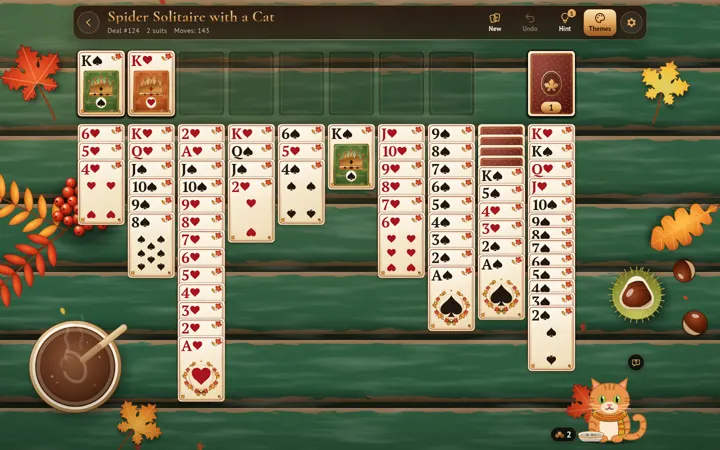
Two decks, 104 cards. Ten columns hold 54 cards, with only the top one face up. The other 50 are the stock: five rows of ten cards.
A two-deck solitaire: ten columns and eight suits to build from king down to ace. Start with one suit and move up to four once you get the hang of it. Free — on a computer, phone or tablet.
The goal is to build eight suits in the columns, each from king down to ace. A finished suit leaves the table by itself.
Two decks, 104 cards. Ten columns hold 54 cards, with only the top one face up. The other 50 are the stock: five rows of ten cards.
A card goes on a card one rank higher, of any suit: a seven on an eight. Nothing goes on an ace, and a king can only go to an empty column. Any card can go to an empty column.
Only cards of the same suit in sequence move together. If a six of spades sits on a seven of hearts, you cannot move the pair — take the column apart first.
Tapping the stock deals a row, one card to each column. While there is an empty column you cannot deal — put a card in it first. When a suit runs from king to ace it flies off to the top. Eight suits — you win.
Yes. Play right away, with nothing to install.
A beginner should pick one: every card is a spade, so suits never interfere and you can focus on order. Two suits is the next step, four is for experienced players. The choice applies to the next new game; the current deal doesn’t change.
While any column is empty, you cannot deal — that is a Spider rule. Put a card in the empty column and dealing works again. The one exception is when there are fewer than ten cards on the table.
Spider uses two decks and ten columns. A card goes on any card one rank higher, but only cards of one suit move together. The aim is to build whole suits right in the columns rather than send cards to foundations.